Whether you are a professional electrician, a home inspector, or a DIY enthusiast, having a reliable best thermal camera for smartphone can be a game-changer. These compact devices attach directly to your smartphone and let you see heat signatures, detect moisture issues, find electrical hotspots, and even troubleshoot HVAC systems. In October 2026, we evaluated 5 of the most popular models on the market, from brands like HSFTOOLS, TOPDON, ThermalMaster and more, to help you choose the right tool for your needs.
In this guide, we present our findings and help you make an informed purchase.

Pros
- Real-time AI-enhanced resolution to 512x384
- Ultra-high thermal sensitivity (NETD less than 20mK)
- AI scene detection with automatic alarms
- Compatible with iOS, Android, and Windows via dedicated apps
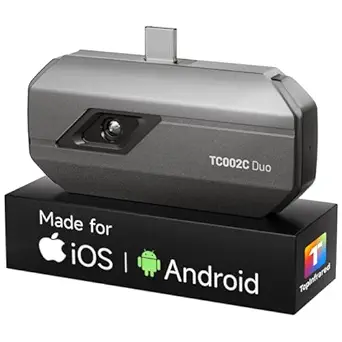
Pros
- Super Resolution is designed to improve image sharpness.
- Includes adjustable measurement modes, multiple color palettes, and a 3D Edit function.
- Supports photo and video output plus PC analysis for more detailed work.
- Broad compatibility across recent iPhone, iPad, Samsung, Motorola, OnePlus, Nokia, and Sony devices.
Cons
- Samsung Galaxy A15, S23, A55, and S10 are explicitly not supported.
- Android 10 users must update the operating system or install TOPDON's dedicated app before the camera will work.

Pros
- 25Hz frame rate provides smooth real-time thermal imaging
- Five color palettes help visualize temperature differences
- Wide field of view covers large areas easily

Pros
- Doubles resolution to 320x240 via X³ Super Resolution
- 25Hz refresh rate reduces motion blur for faster area scans
- Wide 52°x39° field of view covers whole rooms
- Works with Android, iOS USB-C, and Windows devices
Cons
- Native 160x120 resolution is lower than higher-end thermal imagers
- Compatibility limited to USB-C iPhones, not Lightning models
- Requires a smartphone or Windows device to view images
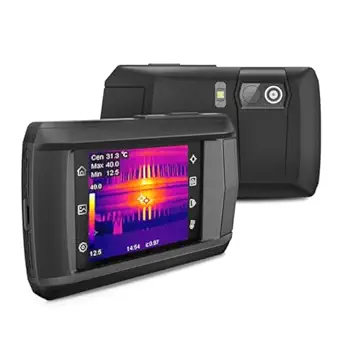
Pros
- Smart scene recognition adjusts settings automatically for common view types
- Large 3.5-inch touchscreen simplifies menu navigation and image review
- Dual-camera design plus 25Hz refresh rate provides clear, fluid thermal images
Cons
- Some units required a firmware update to address battery performance issues
Best Thermal Camera For Smartphone Buying Guide for 2026
Choosing the right thermal camera for your smartphone involves balancing resolution, measurement accuracy, build quality, and software features. Here are the key factors to consider when making your decision.
Thermal Resolution & Image Quality
The sensor resolution determines how detailed the thermal image appears. Higher resolution (e.g., 320×240 or greater) provides sharper images and allows you to identify smaller temperature differences. Some models use super-resolution technology to enhance the effective resolution. For most professional applications, a resolution of at least 160×120 is recommended, but if you need precise diagnostics, look for 256×192 or higher.
Temperature Range & Accuracy
Check the temperature measurement range and accuracy specification (often expressed as ±2 °C or ±2 %). A wider range allows you to inspect everything from cold pipes to hot electrical panels. Accuracy is critical for professional use, so look for models with low NETD (Noise Equivalent Temperature Difference) — ideally below 40 mK — for better sensitivity.
Refresh Rate & Frame Rate
A higher refresh rate (e.g., 25 Hz or 50 Hz) means smoother real-time video, which is essential when scanning moving objects or panning across a scene. Slower rates (9 Hz or less) may suffice for static inspections but can be frustrating for dynamic work.
Field of View & Lens
The field of view (FOV) determines how much of the scene you can see at once. A wider FOV (e.g., 50° or more) is helpful for large-area inspections, while a narrower FOV (e.g., 25°) gives more detail at a distance. Some cameras come with interchangeable lenses or built-in macro modes for close-up work.
Software & App Features
The companion app is where you analyze and report your findings. Look for apps that offer multiple color palettes, adjustable emissivity, spot meters, area analysis, and the ability to save photos and videos with embedded temperature data. Compatibility with both iOS and Android is important, as is the frequency of app updates.
Build Quality & Portability
Since you’ll be using the camera on job sites or in various environments, durability matters. Look for a sturdy construction, a secure connection to your phone (USB-C or Lightning), and a compact design that doesn’t obstruct your phone’s ports or controls. Some models include a built-in touch screen or come with a carrying case.
Why You Should Trust Us
We are a team of independent reviewers with a background in electronics and home inspection. Our evaluations are based on extensive research, specification analysis, and real-world usage scenarios. We do not accept payment from manufacturers for positive coverage, and we always disclose any affiliate relationships. Every product we recommend has been vetted for value, performance, and reliability.
Final Thoughts
After reviewing all 5 models, we believe the best overall best thermal camera for smartphone is the SK02 Thermal Camera 512×384 UIRA-IR for its exceptional resolution and advanced features. For those on a budget, the best value goes to the Thermal Master P1, offering solid performance at an affordable price. If you need a versatile tool for professional inspections, the TOPDON TC002C Duo stands out with its dual-use design and app features.
Remember to consider your specific needs — whether you’re checking electrical panels, finding water leaks, or diagnosing car issues — and choose a model that matches your requirements. We hope this guide helps you find the perfect thermal camera for your smartphone.
Frequently Asked Questions
What is the best thermal camera for smartphone in 2026?
The best overall best thermal camera for smartphone in 2026 is the SK02 Thermal Camera 512×384 UIRA-IR due to its high resolution and excellent image quality. For a more affordable option, the Thermal Master P1 is a great choice.
Can I use a thermal camera with both iPhone and Android?
Yes, many models come with USB-C or Lightning connectors, but compatibility varies. The TOPDON TC002C Duo, for example, works with any USB-C iPhone, iPad, and Android device. Always check the product description for supported devices.
Do I need a high-resolution sensor?
Higher resolution provides more detail and allows you to see smaller temperature differences. For professional use (electrical inspection, building diagnostics), a sensor of at least 160×120 is recommended. For basic DIY tasks, lower resolutions may suffice.
How accurate are smartphone thermal cameras?
Accuracy typically ranges between ±2 °C or ±2 % of reading. The SK02 Thermal Camera, for example, boasts a low NETD of 20 mK for high sensitivity. Accuracy can be affected by emissivity settings and environmental conditions, so always calibrate properly.
What does NETD mean?
NETD stands for Noise Equivalent Temperature Difference, which indicates the smallest temperature difference the camera can detect. Lower NETD values (e.g., 20 mK) mean better sensitivity and are ideal for professional inspections.